 travelguaidewithme
Related Articles
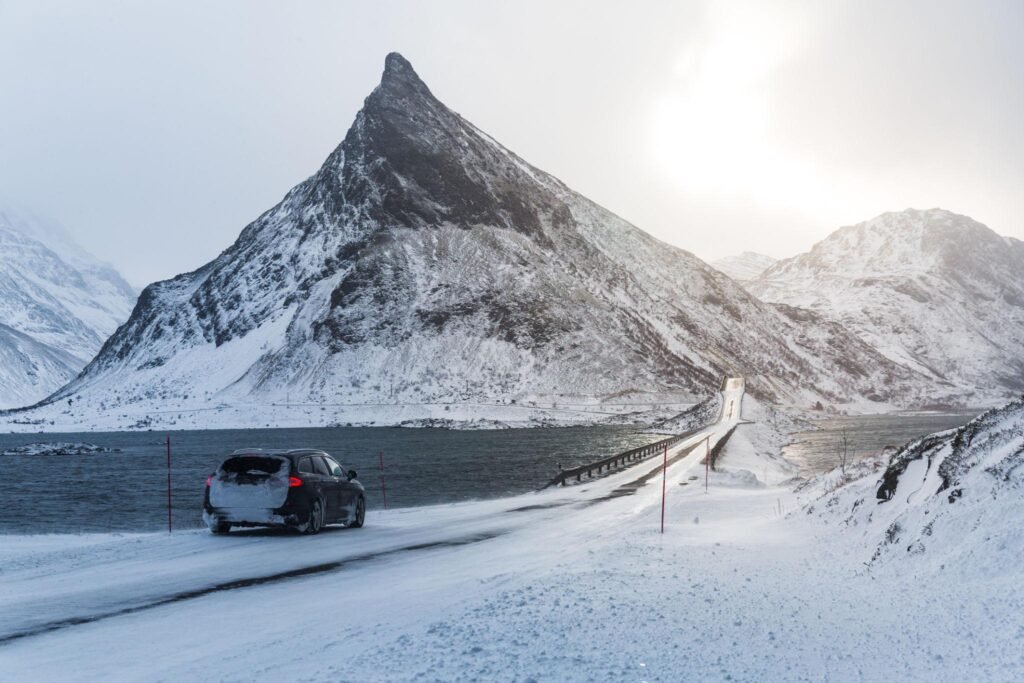
Norway is one of the most beautiful countries to explore by car during winter. Snow covered mountains, frozen landscapes, quiet villages, fjords and the chance to see the Northern Lights make a winter road trip very attractive. At the same time, winter driving in Norway can be challenging, especially for tourists who are not familiar with snow, ice, darkness and rapidly changing weather.
If you are planning to rent a car or drive your own vehicle in Norway during the colder months, understanding the Norway winter driving rules for tourists is very important. Norwegian roads are generally well maintained, but weather conditions can change quickly. A road that looks easy to drive on can become slippery within a short time.
This guide explains the most important winter driving rules, tyre requirements, speed limits, road conditions, rental car advice and safety tips that tourists should know before driving in Norway.
Understanding Winter Driving in Norway
Winter in Norway can last for several months, and driving conditions are not the same everywhere. Coastal areas can sometimes have relatively mild temperatures, while mountain regions and northern parts of the country can experience heavy snow, ice, strong winds and very limited daylight.
Norway’s official tourism guidance recommends that drivers check road and weather conditions before starting a journey and adjust their speed according to the conditions. Winter driving can be particularly difficult for people who have little or no experience driving on snow and ice.
The cold season generally means October through April for winter driving preparation, although actual winter conditions can arrive earlier or remain later depending on the region.
For tourists, the most important thing to remember is that the posted speed limit is not always a suitable speed for the current road conditions. If a road has an 80 kilometre per hour limit but is covered with ice, you may need to drive much slower.
Your responsibility as a driver is to operate the vehicle safely according to the road, weather and traffic conditions.
Norway Winter Tyre Rules
One of the most important parts of the Norway winter driving rules for tourists is understanding tyre requirements.
According to the Norwegian Public Roads Administration, drivers are responsible for ensuring that their vehicle has sufficient road grip throughout the year. During winter, tyres must have a minimum tread depth of 3 millimetres. In the normal winter period, this requirement applies from 1 November until the first Sunday after Easter Monday. In Nordland, Troms and Finnmark, the 3 millimetre requirement applies from 16 October until 30 April.
This does not mean that you should simply look at the calendar and assume the car is ready for winter. If snow or ice is present outside the stated dates, the vehicle still needs suitable equipment to provide sufficient grip.
Summer tyres should not be used on winter roads because they do not provide enough grip on snow and ice.
When renting a car, tourists should confirm that the rental vehicle is properly equipped for the expected weather. In most winter rental situations, the company will provide suitable winter tyres, but it is still sensible to check before leaving the rental location.
Studded Tyres in Norway
Studded tyres can provide extra grip on icy roads, but Norway has specific rules about when they can normally be used.
Studded tyres may generally be used from 1 November until the first Sunday after Easter Monday. In Nordland, Troms and Finnmark, they may generally be used from 16 October until 30 April. If weather and road conditions make their use necessary, studded tyres and chains can also be used outside these periods.
If a car under 3,500 kilograms uses studded tyres, the studs must be fitted to all four wheels.
Tourists should also know that some Norwegian cities charge fees for driving with studded tyres in certain city areas. These charges are designed to reduce pollution caused by road wear from studs.
If you are renting a vehicle, ask the rental company which tyre type is fitted and whether any local studded tyre charges could apply to your route.
Non Studded Winter Tyres
Non studded winter tyres are also widely used in Norway and can be used throughout the year according to the Norwegian Public Roads Administration.
For many tourists, a rental car with good quality non studded winter tyres can be a practical choice. However, the most important factor is not simply whether the tyre has a winter label. The tyres must be appropriate for the actual weather and road surface.
A tyre with the correct marking and legal tread depth does not automatically guarantee good road grip. The driver remains responsible for making sure the vehicle is suitable for the conditions.
Snow Chains and Winter Equipment
Snow chains can be useful when travelling through mountainous areas or during particularly difficult winter conditions.
If you are driving through remote mountain regions, it is worth asking the rental company whether chains are available and whether you are permitted to use them. You should also know how to install them before you actually need them.
Never wait until your vehicle is stuck in deep snow on a mountain road to discover that you do not know how the chains work.
Norwegian winter driving guidance also recommends carrying basic equipment such as an ice scraper, snow brush and small shovel. Warm clothing, food and drinks can also be useful on longer trips through remote areas.
Clear Snow and Ice Before Driving
Before driving, completely clear snow and ice from the vehicle.
This includes the windscreen, side windows, rear window, headlights, mirrors and roof.
Driving with snow covering your windows can seriously reduce visibility. Snow on the roof can also slide forward onto the windscreen when you brake or slide onto another vehicle.
Norwegian tourism guidance warns that driving without sufficient visibility can lead to penalties and other consequences.
A proper snow brush and ice scraper should therefore be among the first things you locate when collecting a rental car.
Do not simply clear a small area of the windscreen and start driving. Take the extra few minutes to make sure you can see properly in every direction.
Norwegian Speed Limits
The general speed limit in Norway is often 80 kilometres per hour outside built up areas, while built up areas commonly have a 50 kilometre per hour limit unless signs indicate otherwise. Some roads have lower limits, while certain motorways and dual carriageways can have higher limits.
However, winter conditions change how fast you should safely drive.
For example, an 80 kilometre per hour road can become dangerous at that speed if it is covered with ice or heavy snow.
Norwegian road safety guidance repeatedly emphasizes adapting speed to road and weather conditions.
As a tourist, do not feel pressured to match the speed of experienced local drivers. If you are uncomfortable, reduce your speed when it is safe to do so and use appropriate passing areas to allow faster traffic to continue.
Driving on Snow and Ice
Snow and ice require a completely different driving style from dry summer roads.
The biggest mistake inexperienced winter drivers make is using sudden movements.
Avoid sudden steering, sudden acceleration and hard braking whenever possible.
Maintain a greater distance from the vehicle ahead because stopping distances can become much longer on slippery surfaces. Norwegian winter driving guidance specifically warns that braking takes significantly longer on icy and slippery roads.
When approaching a bend, slow down before entering the turn rather than braking aggressively while steering.
If you are driving downhill, use a lower gear where appropriate and avoid relying heavily on the brakes for a long period.
When driving uphill, maintain a steady speed and avoid unnecessary acceleration that can cause the tyres to lose grip.
Keep a Safe Distance
Following another vehicle too closely is risky during winter.
Even if you have excellent winter tyres, the car may require considerably more distance to stop on ice or packed snow.
A safe following distance gives you more time to react if the vehicle ahead suddenly brakes or loses control.
This is particularly important when driving behind snowploughs, buses and trucks. Snow or spray from larger vehicles can temporarily reduce your visibility.
If visibility becomes poor, slow down and increase your distance.
Headlights Are Important
Norwegian roads require headlights to be used during the daytime as well as at night.
This is particularly useful during winter because daylight hours can be short, especially in northern Norway.
Snowfall, fog, rain and darkness can make it difficult to see approaching vehicles. Keeping the correct lights on also helps other drivers see you.
If heavy snowfall reduces visibility, do not depend only on hazard lights. Use the appropriate headlights and fog lights where permitted and appropriate.
Norwegian guidance notes that fog lights can be used when visibility is less than 100 metres, but they should be switched off when visibility improves.
Winter Darkness in Norway
One major difference for tourists is the amount of daylight.
In northern Norway, winter daylight can be very limited, and some areas experience periods of polar night. Even farther south, winter days are much shorter than many visitors expect.
This means a journey that looks short on a map may involve several hours of driving in darkness.
Before leaving, calculate how long the journey will take and consider the amount of daylight available.
Do not plan an ambitious mountain drive simply because the distance looks short.
Norwegian roads can include tunnels, narrow sections, steep climbs, bends and exposed areas. Darkness combined with snow can make these roads much more difficult than they appear on a map.
Check the Weather Before Every Journey
Checking the weather should become part of your normal routine during a Norwegian winter road trip.
Weather can change quickly, particularly in mountainous areas.
Norway’s tourism authority recommends checking weather forecasts and road conditions before setting out.
You should pay attention to more than the temperature.
Look for snowfall, freezing rain, strong winds, icy roads, poor visibility and warnings affecting your route.
Freezing rain is particularly dangerous because water can freeze directly on the road surface and create a thin layer of ice.
If conditions are very poor, delaying the journey may be the safest option.
Check Road Conditions and Closures
Before driving long distances, check official Norwegian road information.
The Norwegian Public Roads Administration provides updated information about traffic, road conditions, mountain passes and closures.
This is especially important if your journey includes mountain roads.
A route that is open in the morning may become difficult or closed later because of snow, wind or other weather conditions.
Never assume that a road is safe simply because your navigation application shows it as available.
Navigation apps are useful, but official road information should also be checked during winter.
Mountain Passes Require Extra Care
Mountain driving is one of the biggest challenges for tourists visiting Norway in winter.
Some mountain passes can become unsafe during storms or heavy snowfall. Norwegian authorities can close roads or introduce convoy driving when conditions require it.
If convoy driving is required, vehicles travel together under controlled conditions.
Before travelling through a mountain area, check whether the pass is open and whether convoy driving is required.
Make sure you have enough fuel or battery charge and carry warm clothing, food and drinks.
If a mountain pass is closed, do not attempt to bypass a barrier.
Road closures are there for safety. Weather conditions can be far more dangerous beyond the barrier than they appear from the roadside.
Do Not Stop in the Middle of the Road for Photos
Norway’s winter scenery is spectacular, and tourists naturally want to stop for photographs.
However, never stop in the middle of a road simply because you see a beautiful mountain, fjord or Northern Lights display.
Find a safe parking area or designated stopping place.
Norwegian tourism guidance specifically warns visitors not to stop in the middle of the road for photos.
This is especially important during winter because other drivers may have difficulty seeing your vehicle or stopping on slippery roads.
A few minutes of planning can make the difference between a safe photo stop and a dangerous situation.
Driving on Narrow Norwegian Roads
Many Norwegian roads are narrower than roads tourists may be used to at home.
Some rural roads have limited space for two vehicles to pass comfortably.
You may encounter designated meeting points where one vehicle can wait while another passes.
If you are driving slowly because of snow or unfamiliar conditions, allow local traffic to pass when it is safe.
Norwegian visitor guidance recommends using passing places and showing consideration to other road users.
Do not allow pressure from vehicles behind you to make you drive faster than you can safely manage.
Wildlife on Winter Roads
Winter driving in Norway also requires attention to wildlife.
Moose and deer can appear near roads, particularly in rural and forested areas.
Wildlife warning signs should be taken seriously.
If you see a warning sign, reduce your speed and watch the sides of the road carefully.
Animals can move suddenly onto the road.
Norwegian winter driving guidance also points out that animals such as deer and moose may appear in groups, meaning that seeing one animal can indicate that others may follow.
Extra caution is particularly important during periods of darkness.
Rental Car Advice for Tourists
Renting a car is one of the easiest ways to explore Norway, but tourists should ask a few questions before accepting the vehicle.
First, confirm that the vehicle is equipped for winter conditions.
Ask what type of winter tyres are installed.
Check the condition of the tyres and make sure the vehicle has suitable equipment for the route you plan to drive.
You should also learn how the vehicle’s heating, windscreen defrosting, lights and driving modes work before leaving the rental station.
If the car has an unfamiliar gearbox or driving system, spend a few minutes becoming comfortable with it.
If you have never driven in snow before, Norway may not be the best place to learn winter driving for the first time.
Visit Norway itself advises people who are not accustomed to snow and ice to consider alternatives such as public transport, guided tours or a car with a driver.
Electric Cars in Norwegian Winter
Electric vehicles are extremely common in Norway, and they can be a good choice for a winter road trip.
However, cold temperatures can affect battery performance and driving range.
If you rent an electric vehicle during winter, plan your charging stops carefully.
Do not wait until the battery is nearly empty before looking for a charger, especially when travelling through remote areas.
Norwegian tourism guidance recommends charging when possible in parts of the country where charging stations may be less frequent.
Cold weather, heating use and difficult road conditions can all influence energy consumption.
For a long winter trip, leave yourself a comfortable battery margin rather than planning every kilometre around the vehicle’s maximum advertised range.
Fuel Planning for Winter Road Trips
If you are driving a petrol or diesel vehicle, fuel planning is equally important.
Remote areas may have fewer fuel stations, particularly in mountainous and northern regions.
Do not assume that you will find a fuel station immediately whenever the tank becomes low.
Before a long journey, check where fuel stations are located.
It is usually better to start a mountain or rural journey with plenty of fuel rather than trying to save a small amount by driving with a nearly empty tank.
The same principle applies to electric vehicles.
Mobile Phone Rules
Tourists should also pay attention to mobile phone rules while driving.
Using a mobile phone while driving can result in a substantial fine in Norway. Visit Norway warns that the cost can approach 1,000 euros depending on the circumstances and applicable penalties.
If you need to use navigation, set your route before starting the journey or use a properly mounted navigation system that allows legal hands free operation.
Do not hold your phone while driving.
If you need to make a call, send a message or change your route, stop somewhere safe.
Seat Belts Are Essential
Seat belts must be used by vehicle occupants.
This may seem obvious, but tourists should never treat winter driving casually.
Snow and ice can make a minor mistake much more serious.
Everyone in the vehicle should be properly secured before the journey begins.
Children should also be transported using appropriate child restraint systems according to Norwegian requirements.
Alcohol and Driving in Norway
Norway has strict rules regarding drink driving.
The safest approach for tourists is simple.
If you are going to drive, do not drink alcohol.
Do not assume that a small amount is acceptable simply because you feel normal.
Winter conditions already increase driving difficulty, and alcohol can reduce reaction time and judgment.
If you plan to enjoy Norwegian food and drinks, use public transportation, a taxi, a tour or another safe transportation option.
What to Carry in the Car
A winter road trip should include basic emergency supplies.
Useful items include:
An ice scraper
A snow brush
A small shovel
Warm clothing
Blankets
Food
Drinking water
A phone charger or power bank
Suitable footwear
A reflective item or safety equipment where appropriate
You may not need all of these items on every short city journey, but they can become very valuable if you experience a breakdown or unexpected delay in a remote area.
Visit Norway specifically recommends warm clothing, blankets, food and drinks for trips through mountains and countryside.
What to Do if Your Car Gets Stuck
If your vehicle becomes stuck in snow, avoid making the situation worse by repeatedly spinning the wheels.
Stop and assess the situation.
Clear snow around the tyres if it is safe.
Use suitable equipment if you have it.
If you are on a major road, make sure you remain visible to other traffic.
If conditions are dangerous, seek appropriate assistance rather than attempting a risky recovery yourself.
A fully charged phone can be extremely useful in this situation.
This is another reason not to begin a remote winter journey with a nearly empty fuel tank or low EV battery.
Scenic Routes During Winter
Norway is famous for its scenic roads, but not every scenic route is equally suitable for winter driving.
Some Norwegian Scenic Routes include high mountain sections that can be affected by winter conditions, and some routes are closed during winter because of difficult conditions and challenges with snow clearing.
Always check the current status of a scenic road before planning your journey.
Do not assume that a route shown in a summer travel guide will be accessible in winter.
Common Mistakes Tourists Should Avoid
One of the most common mistakes is driving too fast because the posted speed limit appears comfortable.
Another mistake is assuming that clear weather means the road is safe.
Ice can remain on roads even when the sky is clear.
Tourists may also underestimate driving distances.
Norway is a large country, and a route that looks short on a map can take much longer because of mountains, ferries, narrow roads, weather and winter traffic.
Another common mistake is planning too many attractions in one day.
A relaxed itinerary is much safer than trying to cover hundreds of kilometres before nightfall.
A Simple Winter Driving Routine
Before leaving your hotel or accommodation, check the weather.
Then check road conditions and any mountain pass information.
Clear all snow and ice from the car.
Check your fuel or battery level.
Make sure your phone is charged.
Confirm your route and possible stopping points.
Once on the road, maintain a safe distance and drive according to the conditions.
If weather becomes dangerous, stop somewhere safe or reconsider the journey.
This simple routine can make winter driving much less stressful.
Is Winter Driving in Norway Safe for Tourists?
Yes, winter driving in Norway can be safe for experienced drivers who understand winter conditions and use an appropriately equipped vehicle.
However, tourists should not underestimate the challenge.
Snow, ice, darkness, wind, mountain roads and changing weather can make driving significantly more difficult than during summer.
Norwegian authorities and tourism organizations encourage drivers to adjust their speed, check road conditions and make sure the vehicle has adequate grip.
If you have never driven on snow or ice, using public transportation or joining an organized tour may be a better option.
Final Thoughts on Norway Winter Driving Rules for Tourists
Understanding the Norway winter driving rules for tourists can make your trip safer and more enjoyable.
The most important thing is to respect the weather and never assume that winter roads will behave like dry roads at home.
Use suitable winter tyres, maintain enough tread depth, clear snow and ice from the vehicle, check weather and road conditions before travelling, reduce your speed when necessary and keep a safe distance from other vehicles.
If you are travelling through northern or mountainous Norway, plan even more carefully. Check mountain pass information, keep enough fuel or battery charge and carry warm clothing and basic emergency supplies.
Most importantly, do not feel that you have to drive simply because you have rented a car. If conditions become dangerous or you do not have enough winter driving experience, delaying the journey or choosing another form of transportation can be the smartest decision.
Norway’s winter landscape is incredible, but the safest road trip is one where you have enough time to enjoy the scenery without taking unnecessary risks.
By following the basic Norway winter driving rules for tourists and respecting local road conditions, visitors can experience Norway’s snowy landscapes, fjords, villages and northern lights with greater confidence and peace of mind.
Quick Reference for Tourists
Before driving in Norway during winter, remember these key points:
Check the weather before every long journey.
Check official road conditions before travelling.
Use suitable winter tyres when conditions require them.
Winter tyres generally need at least 3 millimetres of tread depth during the applicable winter period.
Clear snow and ice from every window, headlight and the roof.
Drive slower when roads are snowy or icy.
Keep a longer distance from the vehicle ahead.
Use headlights during the daytime.
Never ignore a road closure or barrier.
Check mountain passes before travelling through mountainous areas.
Carry warm clothes and basic supplies on remote journeys.
Keep your fuel tank or EV battery at a comfortable level.
Do not use a handheld mobile phone while driving.
Never drink and drive.
Do not stop in the road for photographs.
If you are inexperienced with snow and ice, consider public transport, guided tours or a professional driver.
The goal of winter driving in Norway is not to reach your destination as quickly as possible. The goal is to arrive safely and enjoy the journey along the way.