 travelguaidewithme
Related Articles
I have been lucky enough to visit Hunza Valley more than once, and each trip happened during a completely different time of year. Spring, summer, autumn, and even winter, I have experienced this incredible valley through every possible seasonal lens, and I genuinely believe that gives me a unique perspective on one of the most common questions I get asked whenever someone plans a trip up north. What is actually the best time to visit Hunza?
The honest answer is that it depends entirely on what kind of experience you are hoping for, and I want to walk you through exactly what I encountered during each season so you can make that decision based on real experience rather than a generic recommendation.
Why Timing Genuinely Matters in Hunza
Before I get into the specific seasons, I want to explain why this question matters so much in the first place. Hunza is not a destination where the experience stays roughly the same throughout the year. The valley transforms dramatically depending on the season, both visually and in terms of accessibility, weather, and overall atmosphere.
I learned this firsthand by accident, since my very first trip happened in early spring without much planning around timing at all. It was only after returning during other seasons that I realized just how different each version of Hunza truly feels.
Spring in Hunza: My Favorite Season for a Reason
Spring, particularly from late March through April, became my personal favorite time to visit Hunza, and it happened almost entirely by chance during my very first trip. I arrived right as the valley’s famous cherry and apricot blossoms were beginning to bloom, and the entire landscape looked like something out of a painting.
Walking through villages surrounded by blossoming trees, with snow capped peaks still visible in the background, created a contrast that genuinely took my breath away. The weather during this period felt comfortably mild, not too cold and not yet reaching the heat of summer, which made hiking and exploring the valley on foot a genuinely pleasant experience.
What I appreciated most about visiting during spring was how few crowds I encountered compared to what I later experienced during peak summer months. I had entire viewpoints practically to myself, which made the whole trip feel more personal and peaceful.
If experiencing Hunza’s natural beauty at its most photogenic, with blossoms covering the valley and comfortable weather throughout, sounds appealing to you, I genuinely think spring deserves serious consideration as the best time to visit Hunza.
Summer in Hunza: Green Valleys but Bigger Crowds
My second trip to Hunza happened during peak summer, specifically in July, and the experience felt noticeably different from my spring visit. The valley had transformed into lush green terraces, with fruit trees now bearing actual fruit rather than blossoms, and the overall scenery still felt stunning, just in a completely different way.
Summer brought warmer temperatures, which made evenings particularly enjoyable, sitting outside with a clear view of the mountains as the heat of the day faded. This is also the season when I noticed significantly more tourists throughout the valley, since summer aligns with school holidays and generally more favorable travel weather across northern Pakistan as a whole.
Roads leading into Hunza tend to be at their most reliable during summer months, since this is typically when any winter damage has been repaired and weather conditions remain stable for road travel. If you are someone who prioritizes ease of travel and does not mind sharing popular viewpoints with more fellow travelers, summer offers a genuinely convenient and beautiful time to visit.
Autumn in Hunza: The Season That Surprised Me Most
Nothing prepared me for how stunning Hunza looks during autumn. I visited in early October, and the valley had transformed once again, this time into a canvas of deep reds, oranges, and golden yellows as the leaves began to change.
Walking through this landscape felt like experiencing an entirely different valley compared to my previous trips. The combination of autumn foliage against the backdrop of snow capped peaks created some of the most striking photographs I have ever taken anywhere, let alone within Pakistan.
Autumn also brought noticeably cooler temperatures compared to summer, with crisp mornings that made hiking feel refreshing rather than exhausting. Crowds during this period felt more moderate compared to peak summer, striking a nice balance between accessibility and a slightly quieter experience.
If I had to recommend a single season purely based on photography and scenic beauty, autumn genuinely rivals spring as the best time to visit Hunza, and depending on your personal preference for warm autumn colors versus soft spring blossoms, it might even take the top spot.
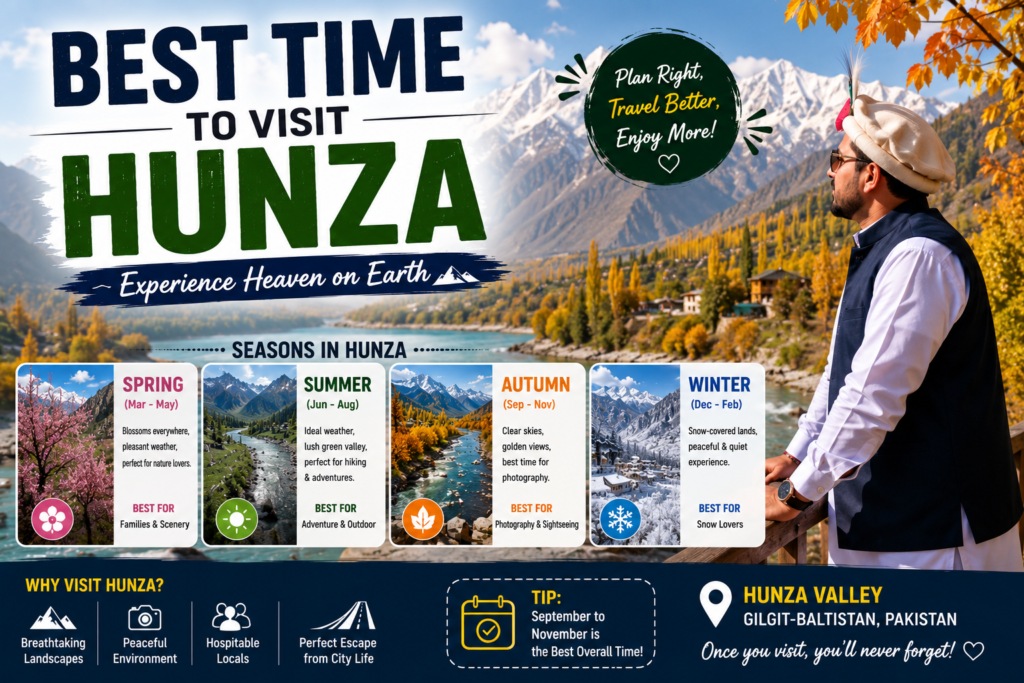
Winter in Hunza: A Completely Different, Quieter World
My final trip to Hunza happened during winter, and I will admit I went in with some hesitation, unsure of what to expect from the valley during its coldest months. What I found completely changed my perspective on winter travel in northern Pakistan.
Snow blanketed the peaks and settled across parts of the valley itself, creating a peaceful, almost silent atmosphere completely different from anything I experienced during my other visits. Tourist crowds all but disappeared, giving me an incredibly intimate, personal experience wandering through villages and taking in views that felt entirely mine during that moment.
That said, winter travel to Hunza comes with genuine challenges worth understanding before committing to a trip during this season. Some roads and higher altitude areas can become difficult or even impossible to access due to snow and ice, and temperatures drop significantly, especially at night. I made sure to pack heavy layers and confirm road conditions before departing, and I would strongly recommend anyone considering a winter trip do the same.
For travelers specifically seeking solitude, snowy landscapes, and a genuinely different side of Hunza that most visitors never see, winter offers a unique and rewarding experience, provided you come prepared for the logistical challenges involved.
Breaking Down the Seasons Based on What Matters Most to You
After experiencing Hunza across every season, I think the best approach to answering this question depends heavily on what you personally value most from a trip.
If photography and scenic beauty top your priority list, spring and autumn both offer stunning, distinct versions of the valley, with blossoms in spring and colorful foliage in autumn creating dramatically different but equally beautiful landscapes.
If convenience, road accessibility, and warmer weather matter most to you, summer remains the most reliable and comfortable option, despite the larger crowds you will likely encounter along the way.
If solitude and a completely unique winter landscape appeal to you, and you are prepared for colder temperatures and potential travel challenges, winter offers an experience unlike any other time of year, rewarding travelers willing to embrace a slower, quieter version of the valley.
What I Wish I Had Known Before My First Trip
Looking back at my very first visit to Hunza, there are a few things I genuinely wish someone had told me beforehand, regardless of which season I ended up choosing.
I did not fully appreciate how much temperatures can shift between day and night, even during warmer months, so I would recommend packing layers no matter which season you choose to visit. I also underestimated how quickly weather conditions can change in a mountainous region like this, which taught me to always build a bit of flexibility into my itinerary rather than planning an overly rigid schedule.
Road conditions leading up to Hunza can vary significantly depending on the season and recent weather events, so checking current conditions before departure became a habit I picked up after my first trip, and one I would strongly recommend to anyone planning their own journey.
How Crowds Change Throughout the Year
One thing that genuinely surprised me across my different visits was just how much the number of fellow travelers shifted depending on the season. Summer, unsurprisingly, brought the largest crowds, particularly around well known viewpoints and popular rest stops along the main road through the valley.
Spring and autumn offered a noticeably more balanced experience, with enough fellow travelers to feel like a well visited destination, but without the overwhelming crowds I encountered during peak summer months. Winter, as I mentioned earlier, brought the quietest experience by far, with entire stretches of the valley feeling almost entirely peaceful and undisturbed.
If avoiding large crowds ranks high on your list of priorities, I would lean toward recommending either autumn or winter based purely on my own observations across multiple trips.
A Few Practical Tips Based on My Own Travels
Regardless of which season you ultimately choose, a few practical lessons from my own trips apply across the board. Booking accommodation in advance became increasingly important the closer I traveled to peak seasons like summer, since popular guesthouses and hotels can fill up quickly during these months.
Checking current road conditions before departure, especially during winter or immediately following heavy rainfall in other seasons, helped me avoid unnecessary delays or complications during my travels. I also found that traveling with a flexible mindset, willing to adjust plans based on weather or local recommendations, consistently led to better overall experiences compared to sticking rigidly to a predetermined schedule.
My Personal Recommendation After Experiencing All Four Seasons
If someone asked me today, after everything I have experienced, to pick just one season as the definitive best time to visit Hunza, I would honestly lean toward autumn. The combination of comfortable weather, stunning foliage, moderate crowds, and generally reliable road conditions creates what I personally consider the most well rounded experience the valley has to offer.
That said, I want to be clear that this is genuinely a personal preference based on my own experiences and priorities. Someone who dreams of seeing Hunza’s famous blossoms in full bloom might feel just as strongly that spring deserves the top spot, and someone seeking a peaceful, snow covered escape from crowds entirely might argue winter offers something unmatched by any other season.
Final Thoughts From My Travels Through Every Season
Having now experienced Hunza Valley across spring, summer, autumn, and winter, I feel genuinely fortunate to understand this destination in a way that few visitors get the chance to. Each season revealed a completely different side of the valley, and honestly, I do not think there is a single wrong time to visit as long as your expectations align with what that particular season actually offers.
If you are trying to decide on the best time to visit Hunza for your own upcoming trip, I hope sharing my honest experiences across every season helps guide your decision. Whichever time of year you choose, I have no doubt Hunza will leave as lasting an impression on you as it has consistently left on me, trip after trip, season after season.