 travelguaidewithme
Related Articles



Packing for a trip should feel exciting, not stressful. Yet almost every traveler knows the last minute panic of standing in front of an open suitcase, wondering if they forgot something important. That is exactly why a solid travel packing checklist is one of the most valuable tools you can have before any journey, whether you are heading out for a weekend getaway or a month long adventure abroad.
In this guide, we will walk through everything you need to build a complete travel packing checklist, avoid common packing mistakes, and make sure you arrive at your destination with exactly what you need and nothing you do not.
Why You Need a Travel Packing Checklist
It is easy to assume you can pack from memory. Most of us have traveled enough times to think we know the drill. But the truth is, packing without a plan almost always leads to forgotten essentials or overpacked bags full of things you never use.
A travel packing checklist solves this problem in a few key ways.
First, it saves time. Instead of running around your home at the last minute trying to remember everything, you simply follow your list step by step.
Second, it reduces stress. Travel already comes with enough unknowns, from flight delays to unfamiliar destinations. Knowing your bag is packed correctly gives you one less thing to worry about.
Third, it helps you avoid overpacking. When you write things down in categories, you can see exactly what you are bringing and cut out the items you do not actually need.
Finally, a checklist helps you adapt quickly. Once you have a master list, you can tweak it for different types of trips rather than starting from scratch every single time.
Start With the Essentials
Every travel packing checklist should begin with the non negotiables, the items that would derail your trip if left behind.
Travel Documents
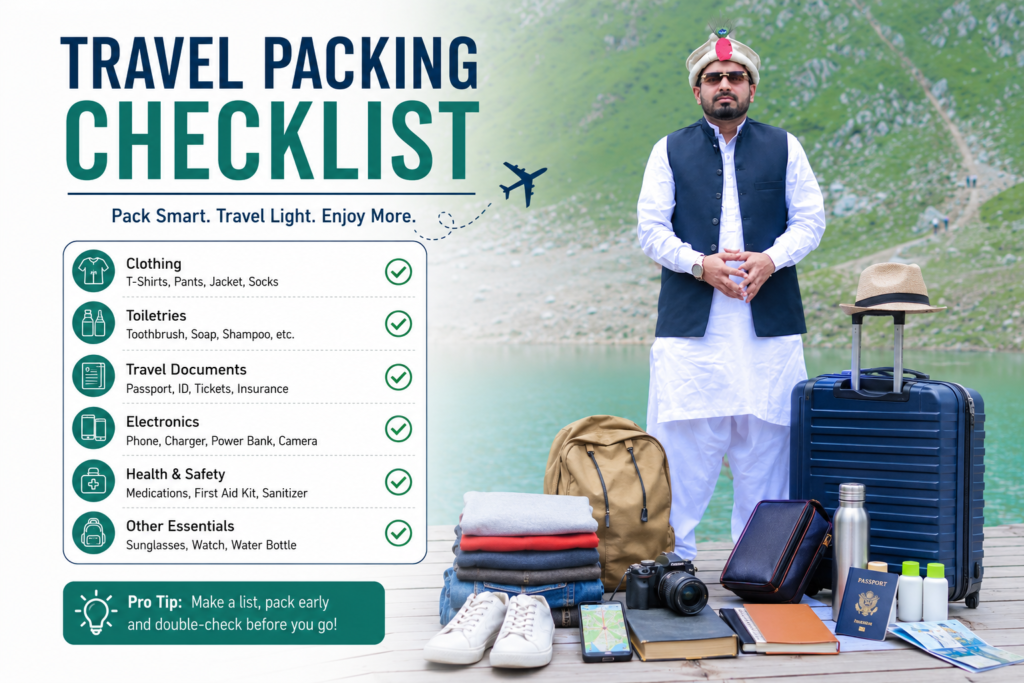
Nothing matters more than your documents. Before you even think about clothes or gadgets, make sure you have the following ready to go.
Passport and visa, if required for your destination Driver’s license or government issued ID Boarding passes, printed or downloaded to your phone Hotel and rental confirmations Travel insurance information Copies of important documents stored separately from the originals
It helps to keep a small folder or a document organizer just for travel papers. Many experienced travelers also take photos of their documents and store them in a secure cloud folder in case anything gets lost.
Money and Payment Methods
Bring a mix of payment options rather than relying on just one. A primary credit card, a backup card, and a small amount of local currency will cover most situations. Let your bank know about your travel dates ahead of time so your card is not flagged for suspicious activity while you are away.
Health and Safety Items
Depending on your destination, you may need specific medications, vaccination records, or health insurance cards. Always pack a basic first aid kit with bandages, pain relievers, motion sickness tablets, and any prescription medication you take regularly. If you wear glasses or contacts, bring a backup pair just in case.
Clothing: Pack With Purpose
Clothing is usually where people overpack the most. The trick to a smart travel packing checklist is packing versatile pieces that can be mixed and matched rather than bringing a separate outfit for every single day.
A good rule of thumb is to lay out everything you think you need, then remove about a third of it. Chances are you will not miss those extra items at all.
Here is a general clothing checklist that works for most trips.
Tops for each day, ideally items that pair with multiple bottoms Pants, shorts, or skirts depending on the season A light jacket or sweater for cooler evenings Sleepwear Undergarments and socks for each day, plus a couple extra Comfortable walking shoes One nicer outfit in case of a special occasion A swimsuit if your destination has a beach or pool
Think about the climate and activities planned for your trip. A beach vacation calls for lightweight, breathable fabrics, while a winter trip requires thermal layers, gloves, and a warm coat. If you are heading somewhere with unpredictable weather, packing a few layers gives you flexibility without needing to bring bulky items.
Toiletries and Personal Care
Toiletries often get overlooked until the morning of departure, so it helps to have a dedicated section on your travel packing checklist just for these items.
Toothbrush and toothpaste Shampoo, conditioner, and body wash in travel sized containers Deodorant Skincare products, including sunscreen Razor and shaving cream Hairbrush or comb Makeup and makeup remover, if applicable Contact lenses and solution, if applicable Feminine hygiene products Hand sanitizer and wet wipes
If you are flying, remember that liquids typically need to be under a certain size and packed in a clear bag for security screening. Buying travel sized versions ahead of time, or transferring your favorite products into small reusable bottles, can save you money and space.
Electronics and Gadgets
Modern travel almost always involves some kind of technology, so this category deserves its own spot on your checklist.
Phone and charger Portable power bank Universal travel adapter, especially for international trips Headphones Camera and extra memory cards, if you enjoy photography E-reader or tablet for entertainment Laptop and charger, if needed for work
Before you leave, download offline maps, entertainment, or important documents in case you do not have reliable internet access during your trip. It is also smart to back up your phone before traveling, just in case anything happens to your device.
Comfort Items for the Journey Itself
Long flights, train rides, or road trips are much more enjoyable when you pack a few comfort items specifically for the travel portion of your trip.
Neck pillow Eye mask and earplugs A light blanket or scarf that can double as a blanket Snacks for the road Reusable water bottle A book, magazine, or downloaded entertainment
These items might seem small, but they make a noticeable difference when you are stuck in a middle seat for six hours or waiting through a long layover.
Packing for Specific Types of Trips
While a general travel packing checklist covers the basics, different trips call for different additions. Here are a few common scenarios and what to add to your list.
Business Trips
For work travel, focus on professional attire, a reliable laptop bag, business cards, and any presentation materials you might need. Pack a portable steamer or wrinkle release spray to keep your clothes looking sharp, and bring a compact charger setup so you can stay connected between meetings.
Beach Vacations
Beach trips call for swimwear, sun protection, flip flops, a beach bag, and a good book. Do not forget after sun care in case you spend more time in the sun than planned. A dry bag is also useful for keeping your phone and wallet safe near the water.
Winter Getaways
Cold weather trips require thermal layers, waterproof boots, gloves, a warm hat, and lip balm to prevent chapping. If you plan to ski or snowboard, check whether your accommodation provides gear rental so you are not stuck packing bulky equipment.
International Travel
Traveling abroad adds a few extra considerations to your travel packing checklist. Make sure you have your passport, any required visas, a copy of your itinerary, and a basic understanding of the local currency and customs. A phrasebook or translation app can also be incredibly helpful if you are heading somewhere the local language is unfamiliar to you.
Backpacking and Adventure Trips
If your trip involves hiking, camping, or extended outdoor activity, prioritize lightweight and durable gear. A good backpack, moisture wicking clothing, a reliable water filtration method, and a basic repair kit for gear can make or break your experience.
Common Packing Mistakes to Avoid
Even with a checklist in hand, it is easy to fall into a few common traps. Here are mistakes worth watching out for.
Packing too many shoes. Shoes take up significant space and weight, so stick to two or three versatile pairs at most.
Overpacking clothes for every possible scenario. Remember that most destinations have laundry facilities or laundromats if you run low on clean clothes.
Forgetting to check the weather. Always look up the forecast a few days before departure so you are not caught off guard by unexpected rain or temperature swings.
Ignoring luggage weight limits. Airlines often charge hefty fees for overweight bags, so weigh your suitcase before heading to the airport.
Packing valuables in checked luggage. Keep jewelry, electronics, and important documents in your carry on in case checked bags get lost or delayed.
Waiting until the last minute. Starting your packing process a few days before departure gives you time to notice anything missing and make adjustments calmly.
How to Organize Your Suitcase
Once you have your travel packing checklist finalized, the way you pack matters just as much as what you pack.
Packing cubes are a game changer for keeping your suitcase organized. They allow you to separate clothing by category or by day, making it much easier to find what you need without unpacking everything.
Rolling clothes instead of folding them saves space and helps reduce wrinkles. Heavier items like shoes and toiletry bags should go at the bottom of your suitcase, close to the wheels, to keep your bag balanced and stable.
Keep frequently used items, like your phone charger or a change of clothes, near the top or in an easily accessible pocket. This way you are not digging through your entire suitcase at security or during a layover.
Building Your Own Reusable Checklist
The best travel packing checklist is one you can reuse and adjust for future trips. Consider creating a master document, either on paper or in a notes app, broken into categories like documents, clothing, toiletries, electronics, and comfort items.
Before each trip, review the master list and adjust based on your destination, the length of your stay, and the season. Over time, you will notice patterns in what you actually use versus what sits untouched in your bag, allowing you to fine tune your packing process trip after trip.
Some travelers like to keep a small notebook where they jot down anything they wished they had packed, or anything they brought but never used. This running list becomes an incredibly useful reference for future travel and helps you pack smarter every single time.
Final Thoughts
A well thought out travel packing checklist takes the guesswork out of preparing for any trip. By breaking your packing into clear categories such as documents, clothing, toiletries, electronics, and comfort items, you can move through the process quickly and confidently.
The goal is not to pack everything you might possibly need, but to pack thoughtfully so you have exactly what serves you during your trip. With a reliable checklist in hand, you will spend less time worrying about what you forgot and more time enjoying the destination you worked so hard to get to.
Whether you are planning a quick weekend trip or a long international adventure, taking a few minutes to build and follow a travel packing checklist will make your journey smoother from the moment you leave your front door to the moment you return home.